This is the Complete Guide to Costa Rica's Northern Wetland:
The National Wildlife Refuge Caño Negro
Caño Negro Wildlife Refuge is one of Costa Rica’s most important wetland ecosystems, located in the country’s northern lowlands near the border with Nicaragua. Its network of lagoons, marshes, rivers, and seasonally flooded forests creates a unique habitat for an extraordinary variety of birds, mammals, reptiles, and other wildlife.
What makes Caño Negro different from many of Costa Rica’s better-known nature destinations is its wetland environment and the way water shapes the entire experience. Wildlife is often explored by boat along the Río Frío and through the refuge’s waterways, allowing visitors to reach areas that are difficult or impossible to explore on foot. Water levels and seasonal conditions also influence what you can see and how you experience the refuge.
For birdwatchers and wildlife photographers, Caño Negro is particularly rewarding. The refuge supports an impressive diversity of resident and migratory birds, while its wetlands and surrounding forests provide opportunities to observe monkeys, sloths, caimans, reptiles, and other wildlife in their natural environment. The combination of open water, forest, and wetlands also creates exceptional opportunities for wildlife photography.
Caño Negro is also a destination for travellers looking for a quieter, more authentic nature experience away from Costa Rica’s busiest tourist routes. Rather than being a conventional sightseeing stop, the refuge rewards visitors who take the time to explore its waterways, observe its wildlife, and experience the changing landscape of one of northern Costa Rica’s most remarkable protected areas.
What Is Caño Negro Wildlife Refuge?
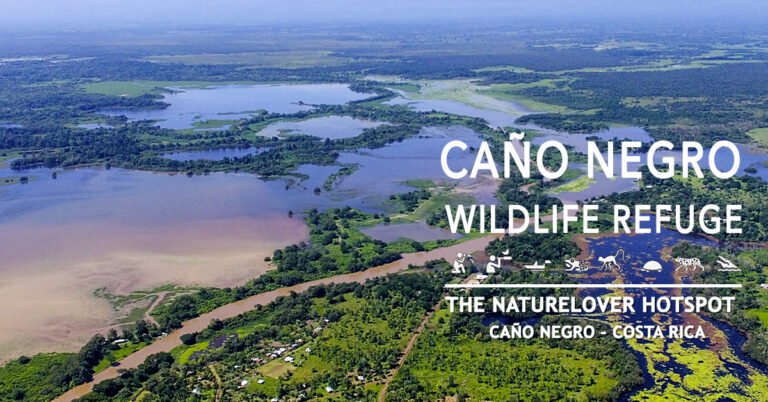
Caño Negro Wildlife Refuge is a protected wetland in the northern lowlands of Costa Rica, near the Nicaraguan border. Located in the lower basin of the Río Frío, the refuge protects a remarkable mosaic of shallow lagoons, marshes, slow-moving rivers, waterways, seasonally flooded forests, and other wetland habitats.
Unlike many of Costa Rica’s better-known protected areas, Caño Negro is shaped by water and seasonal flooding. The landscape changes throughout the year as water levels rise and fall, connecting and separating lagoons, channels, marshes, and flooded areas. This constantly changing environment is one of the reasons the refuge supports such a rich diversity of birds, mammals, reptiles, fish, and other wildlife.
A Unique Wetland Ecosystem
The heart of Caño Negro is its network of freshwater lagoons, marshes, rivers, and waterways. The largest is Caño Negro Lagoon, a shallow freshwater lagoon fed by the Río Frío and its tributaries. Around the open water are extensive areas of seasonally flooded marshes, palms, wetland vegetation, and flooded or swamp forests.
The Río Frío is particularly important to the refuge. Its waters and tributaries form part of the hydrological system that sustains the wetlands, while the river and interconnected channels provide natural routes through habitats that are difficult to explore from land. During periods of higher water, areas of the wetland become interconnected; during the dry season, water levels can fall substantially and larger bodies of water may break into smaller lagoons and channels.
This seasonal cycle is fundamental to the refuge. Flooding, water levels, and the changing availability of aquatic habitats influence where wildlife feeds, rests, breeds, and moves. For visitors, this means that Caño Negro is not exactly the same experience throughout the year—the landscape and wildlife viewing opportunities change with the water.
The combination of open lagoons, marshes, waterways, and forest also explains why Caño Negro is particularly valuable for birdwatching and wildlife observation. SINAC notes that the refuge’s diverse environments support a large variety of resident and migratory birds, as well as mammals, reptiles, amphibians, and fish.
A Ramsar Wetland of International Importance
Caño Negro’s importance extends beyond Costa Rica. The refuge was designated a Wetland of International Importance under the Ramsar Convention on December 27, 1991, making it one of Costa Rica’s early Ramsar sites. Ramsar identifies Caño Negro as Ramsar Site No. 541, covering approximately 9,969 hectares.
The Ramsar designation recognizes the importance of Caño Negro as a shallow freshwater wetland surrounded by seasonally inundated marshes and woodland. The site forms part of a broader network of wetlands used by breeding and migratory waterbirds, while its aquatic ecosystems also support important populations of fish and reptiles.
Today, Caño Negro remains one of Costa Rica’s most significant wetland ecosystems, not simply because of its size, but because of the ecological functions performed by its interconnected waterways, lagoons, marshes, and seasonally flooded habitats. SINAC also identifies the refuge as an important area for biodiversity conservation and as a natural system that helps regulate flooding in the Río Frío basin.
Where Is Caño Negro Wildlife Refuge?
Caño Negro Wildlife Refuge is located in northern Costa Rica, in the province of Alajuela, near the border with Nicaragua. The protected area lies within the lower Río Frío basin and extends primarily across the cantons of Los Chiles and Guatuso. According to SINAC, approximately 83% of the refuge lies within Los Chiles, with the remainder in Guatuso.
The community of Caño Negro is located within the protected area and serves as the main gateway for visitors exploring the refuge. Nearby towns such as Los Chiles and Upala provide additional services and access routes to the region.
Caño Negro is also geographically connected to several important destinations in northern Costa Rica. Travelers commonly combine a visit to the refuge with time in the Arenal and La Fortuna region, Bijagua and Tenorio, or other destinations in the northern lowlands. Its location makes it particularly interesting for travelers who want to explore a less conventional side of Costa Rica’s wildlife and wetland ecosystems.
Make Sure You Are Visiting the Original Caño Negro Wildlife Refuge
Not every tour advertised as “Caño Negro” actually takes you into the National Refuge of Caño Negro. Some excursions visit nearby wetlands or similar environments and use the name Caño Negro because of the destination’s reputation for wildlife and birdwatching.
The easiest way to make sure you are visiting the real refuge is to travel to the town of Caño Negro. The village is the main gateway to the National Refuge, and from there boat excursions can enter the protected area and explore its river, lagoons, wetlands, and forests.
Before booking a tour, check where the boat actually operates and whether it enters the National Refuge of Caño Negro. This is particularly important if wildlife, birdwatching, or photography is the main reason for your visit.
Learn more about how to recognise the Original Caño Negro Wildlife Refuge and what to check before booking your boat tour.
Why Visit Caño Negro Wildlife Refuge?
Caño Negro Wildlife Refuge offers a very different kind of nature experience in Costa Rica. Instead of trails leading through a conventional rainforest, much of the refuge is explored through a network of lagoons, rivers, marshes, and natural waterways. The result is an environment where water, forests, and wildlife are closely connected—and where every visit can reveal something different.
Wildlife in Its Natural Environment
One of the main reasons to visit Caño Negro is the opportunity to observe wildlife in a protected wetland ecosystem. The refuge provides habitat for a remarkable variety of birds, mammals, reptiles, fish, and amphibians, including species that depend specifically on wetlands and aquatic environments. SINAC reports more than 300 bird species, including both resident and migratory species, as well as a diverse range of mammals and other wildlife. Meanwhile, eBird reports 377 species.
Because much of the refuge is made up of waterways and seasonally flooded habitats, wildlife can often be observed from a boat without the need to approach animals directly. This makes the experience particularly rewarding for visitors who enjoy quiet observation, nature exploration, and wildlife photography.
Birdwatching in a Wetland Hotspot
Birdwatching is one of the defining experiences of Caño Negro. The refuge’s combination of freshwater wetlands, forests, lagoons, and waterways creates habitat for an exceptional diversity of birds. Its location also brings together species associated with both the Caribbean and Pacific regions of Costa Rica, along with migratory birds that use the wetland during their journeys. :contentReference[oaicite:2]{index=2}
For birders, the appeal is not simply the number of species. It is the opportunity to explore different habitats within a relatively compact wetland system, from open lagoons and marshes to forest channels and river edges. Depending on the season and water conditions, the species and habitats encountered can change considerably.
For a deeper look at birdwatching in the refuge, see our Caño Negro birding guide.
Wildlife Photography in a Changing Landscape
Caño Negro is also an exceptional destination for wildlife photography. The open water, wetland vegetation, forest edges, and natural waterways create different backgrounds and perspectives for photographing birds and other wildlife. Exploring by boat can also provide opportunities to observe animals from the water without disturbing their natural behaviour.
The experience changes with the landscape itself. Seasonal flooding and changing water levels affect both the appearance of the wetland and where wildlife can be found. For photographers, this means that returning at a different time of year can produce a completely different photographic experience.
For photographers looking for a more specialised experience, explore our wildlife photography experiences in Caño Negro.
Explore the Wetlands by Boat
Boat exploration is one of the best ways to experience the heart of Caño Negro Wildlife Refuge. Because the refuge is a wetland, many of its natural routes are aquatic rather than traditional walking trails. Local boat operators navigate the lagoons, channels, and waterways using their knowledge of the changing conditions of the wetland.
From the water, visitors can experience lagoons, marshes, forest channels, riverbanks, and wildlife habitats that would otherwise be difficult to reach. The quiet movement of a boat also makes it possible to spend time observing birds and other animals without turning the experience into a conventional sightseeing excursion.
Explore our Caño Negro boat tours to see how you can experience the refuge by water.
A Different Side of Costa Rica
Caño Negro is for travellers who want to experience Costa Rica beyond its most conventional tourist routes. The refuge is located in the northern lowlands, within a landscape shaped by wetlands, seasonal flooding, wildlife, and local communities. The community of Caño Negro itself is located within the protected area and has developed a close relationship with the natural resources of the wetland.
That combination gives Caño Negro a distinctive character: wildlife, water, local life, and conservation are part of the same experience. For travellers willing to slow down and spend time exploring the refuge, Caño Negro offers an opportunity to discover a less familiar side of Costa Rica—one defined not by crowds or conventional attractions, but by wetlands, wildlife, birdwatching, and authentic nature experiences.
Wildlife in Caño Negro Refuge
Wildlife is the heart of the Caño Negro experience. The refuge protects a mosaic of lagoons, marshes, waterways, seasonally flooded forests, and river habitats that support an extraordinary variety of species. Hundreds of bird species, along with mammals, reptiles, amphibians, and fish, can be found throughout this remarkable wetland ecosystem.
What makes Caño Negro particularly interesting is not simply the number of species, but the variety of habitats concentrated within the wetland. Open lagoons attract different birds from those found along forest channels, riverbanks, marshes, and seasonally flooded areas. As water levels change, so do the conditions that determine where wildlife feeds, rests, and moves.
Birds
Birds are among the most visible and diverse forms of wildlife in Caño Negro. The refuge is an exceptional destination for birdwatchers, with both resident and migratory species using its lagoons, marshes, forests, and waterways.
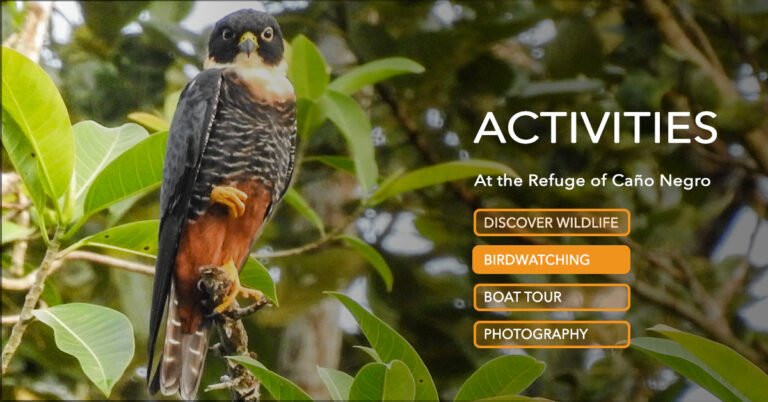
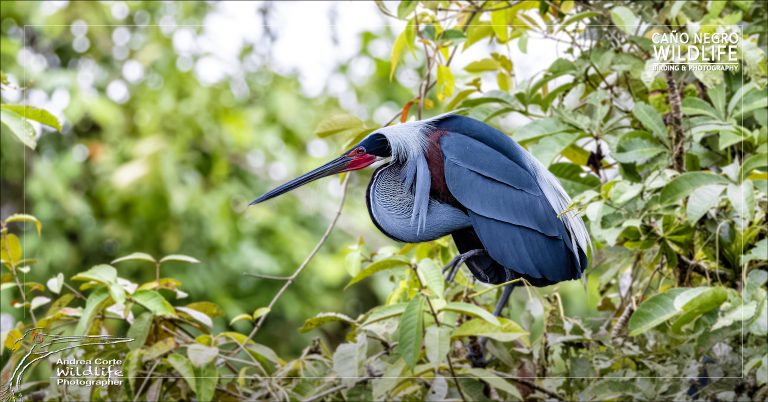
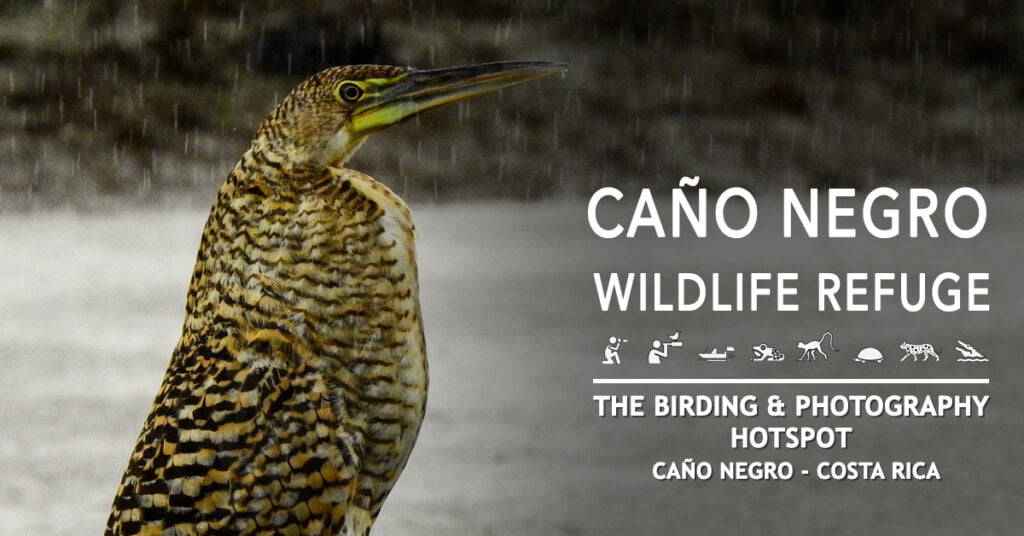
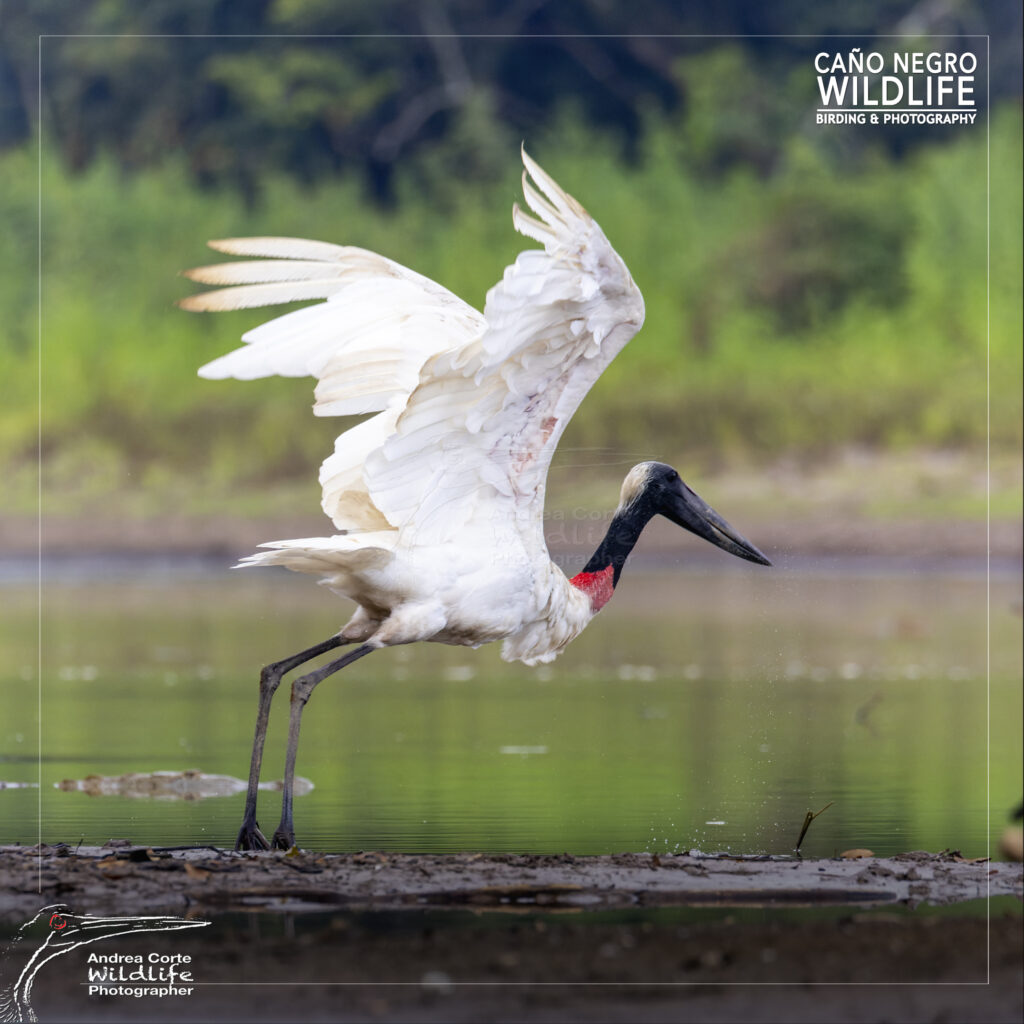
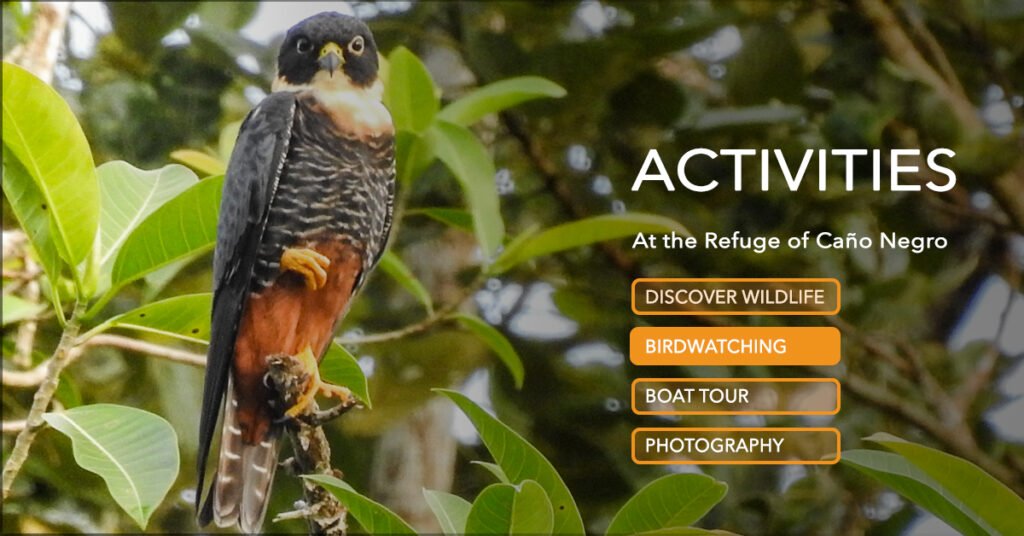
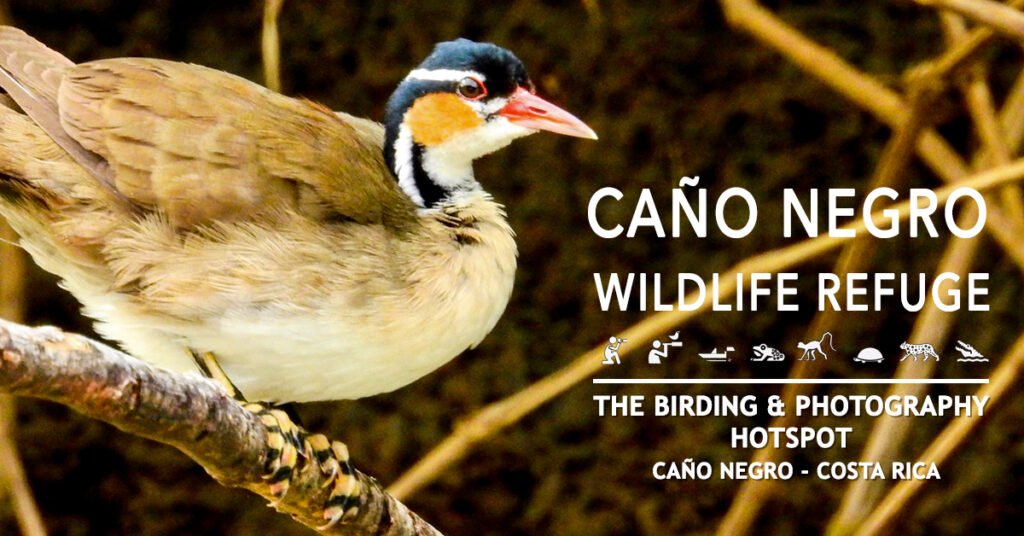
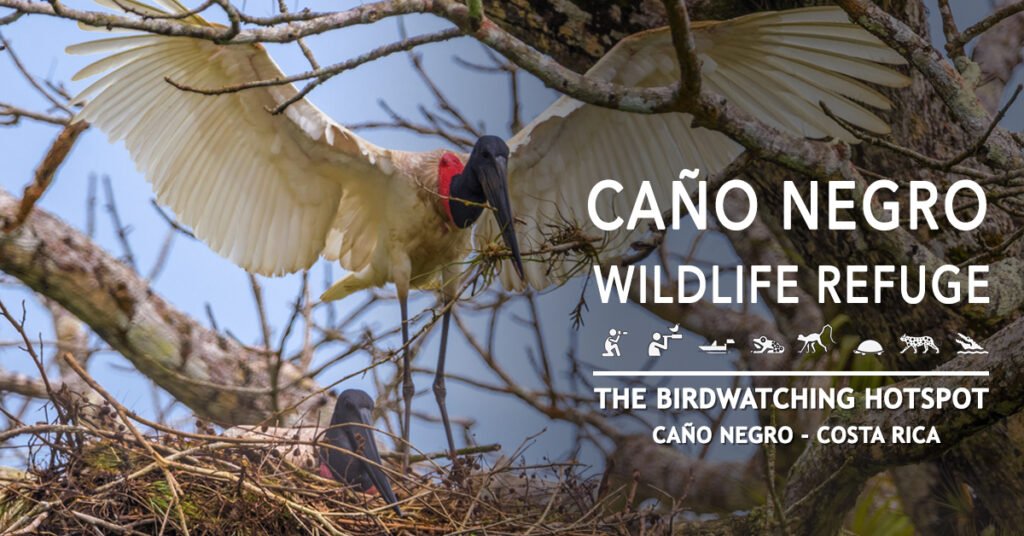
Depending on the habitat and season, visitors may encounter herons, kingfishers, ibises, hawks, waterfowl, jacanas, anhingas, and other wetland birds. Among the species of particular interest to birdwatchers in Caño Negro are the Agami Heron, Black-collared Hawk, Yellow-breasted Crake, Nicaraguan Grackle, Snail Kite, Sungrebe, Pinnated Bittern, Sora, Least Bittern, and Jabiru.
Some species are closely associated with open lagoons and marshes, while others are more likely to be found along forest channels, riverbanks, or areas of dense vegetation. Seasonal conditions also influence which birds are present and where they can be observed.
Explore our birding experience in Caño Negro for a deeper look at the birds, habitats, and field experience available in the refuge.
Mammals
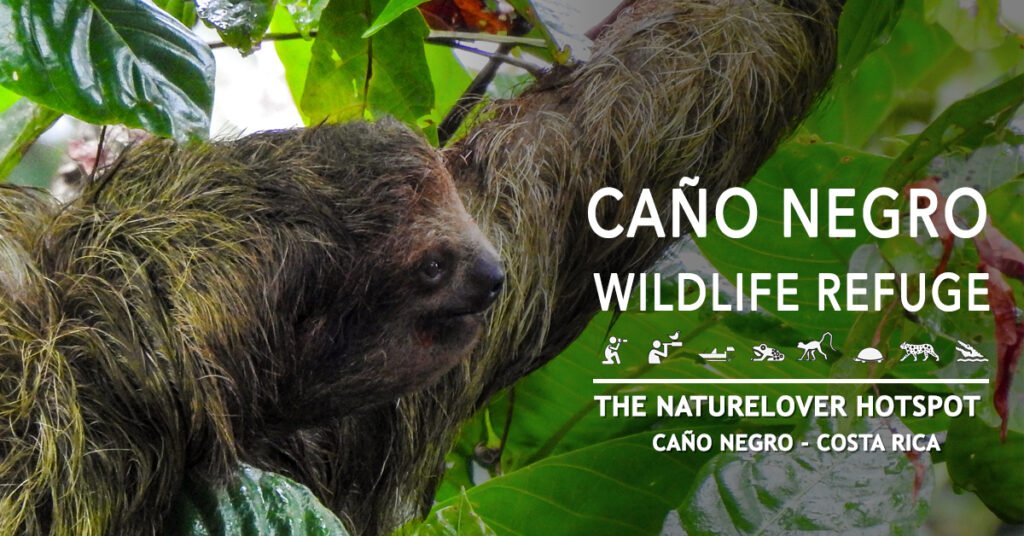
Caño Negro is home to an impressive variety of mammals. Monkeys, sloths, and other mammals inhabit the forests and vegetation surrounding the wetlands, while species adapted to aquatic and river environments can be encountered along the waterways.
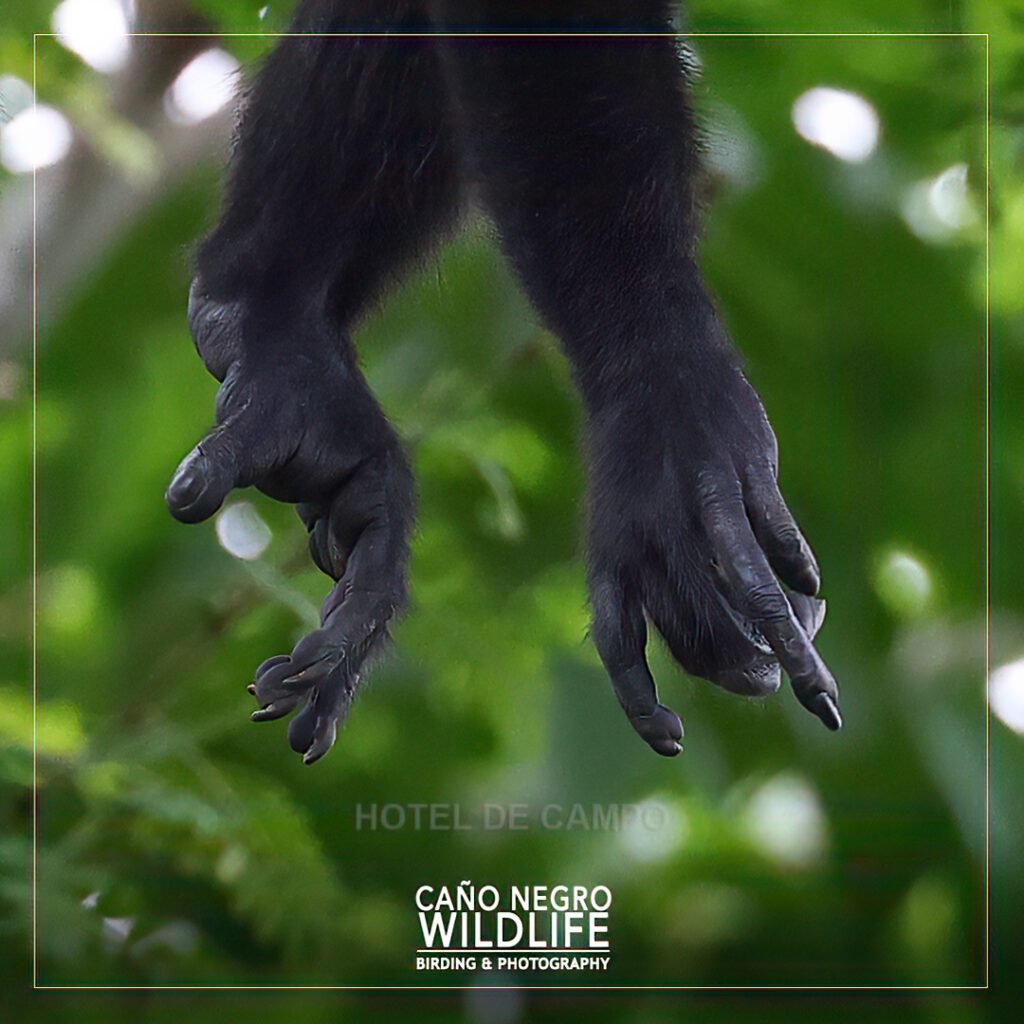
Visitors may encounter mantled howler monkeys, white-faced capuchins, spider monkeys, sloths, peccaries, and raccoons, among other species. Some mammals are easier to detect from the waterways than others, while many require patience and careful observation.
Wildlife viewing in Caño Negro is a natural encounter, not a guaranteed checklist. Animals move freely through the refuge, and the time of day, season, water conditions, and habitat being explored all influence what you may see.
Reptiles and Aquatic Wildlife
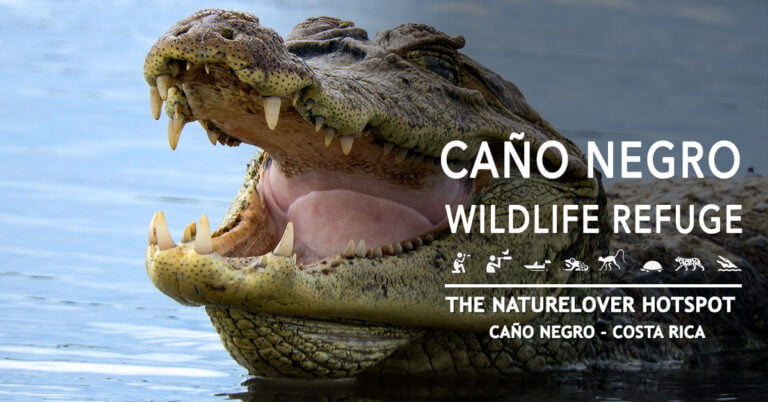
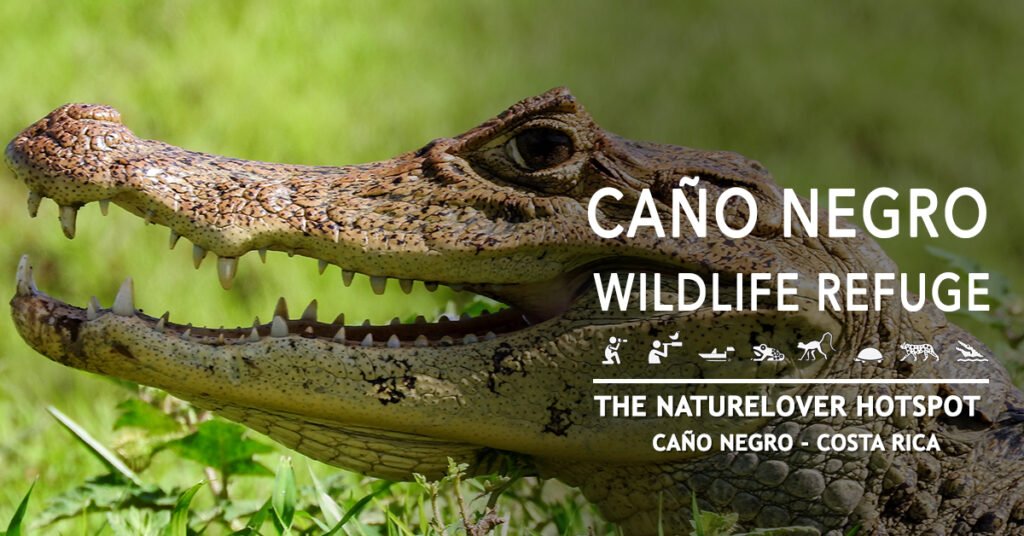
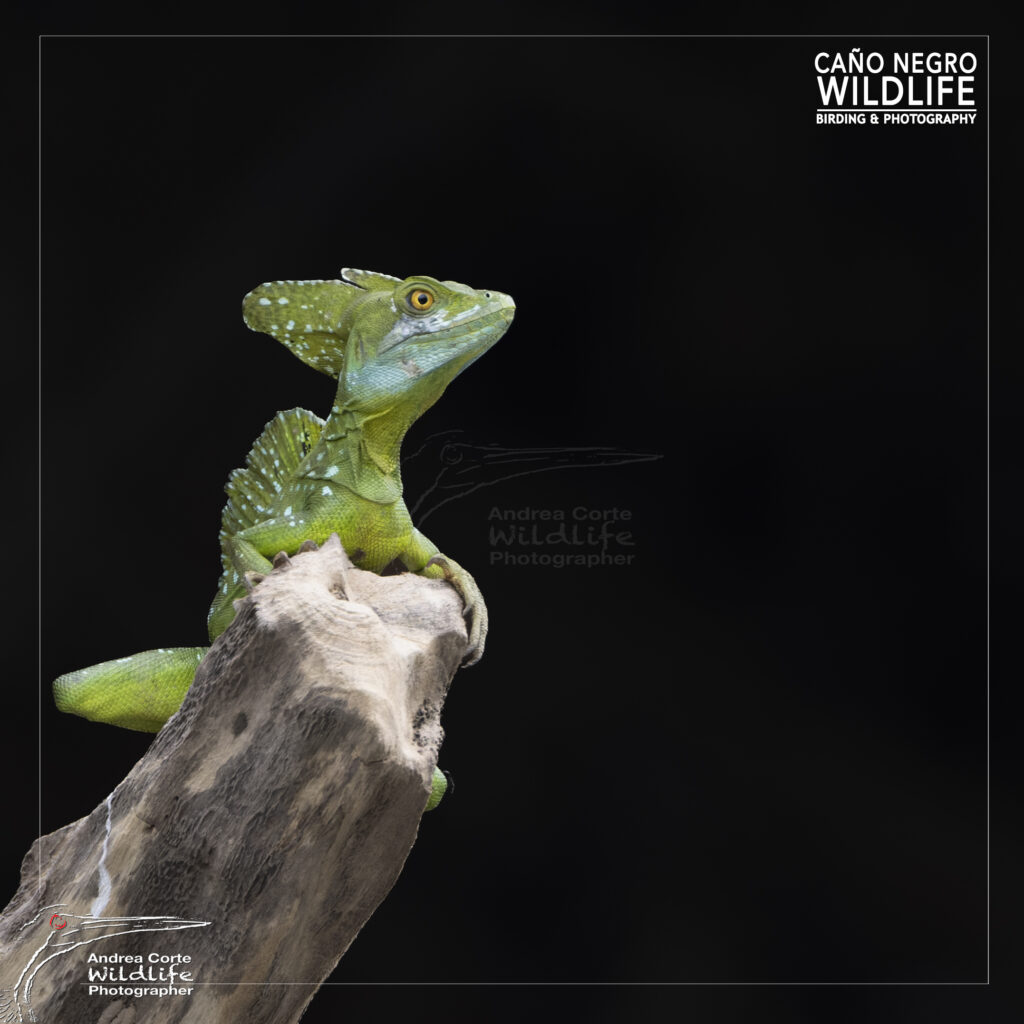
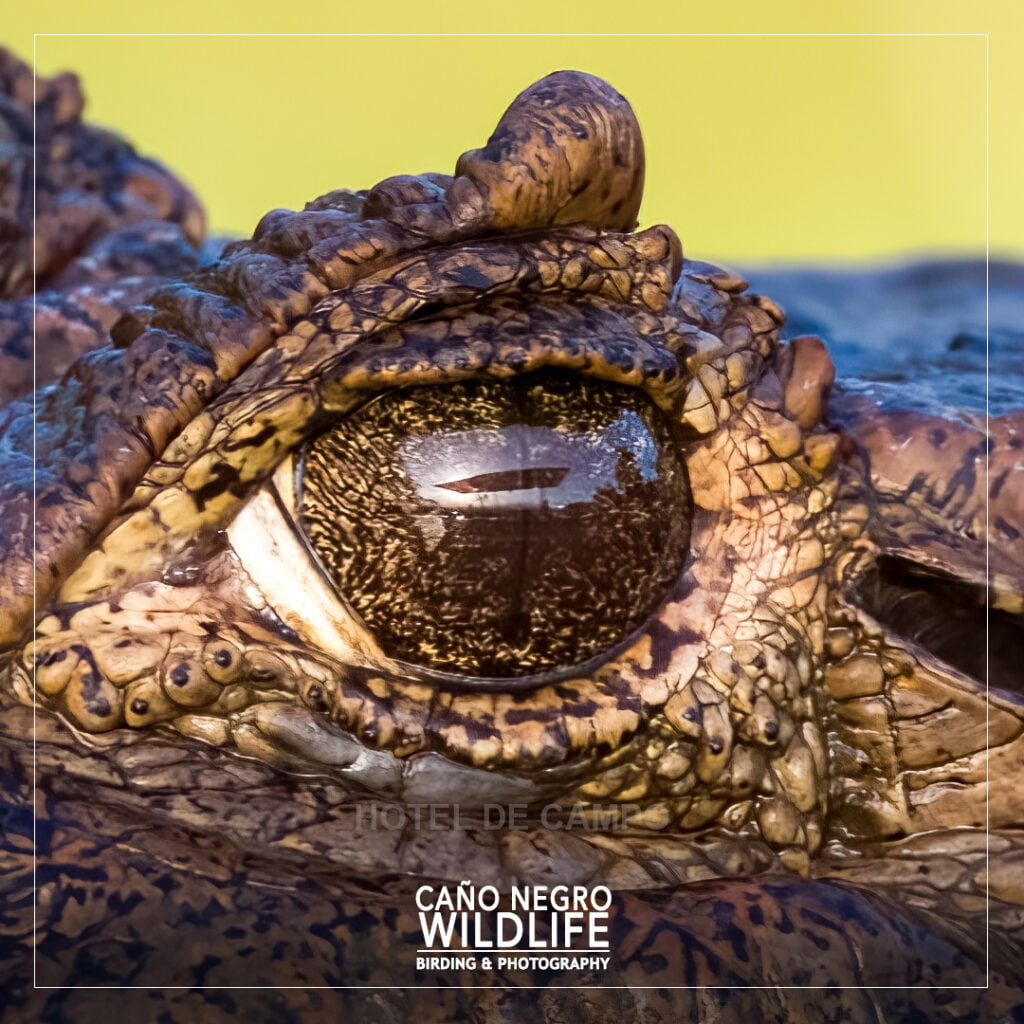
The wetlands are also important habitat for reptiles and aquatic wildlife. Visitors may encounter caimans, crocodiles, iguanas, basilisk lizards, and freshwater turtles along lagoons, riverbanks, and waterways.
The refuge’s aquatic environment also supports a rich variety of fish. Species such as gaspar, tarpon, and snook are part of the wetland ecosystem and contribute to the food web that supports birds, reptiles, and other wildlife.
The gaspar is particularly interesting for visitors interested in the natural history of Caño Negro. This ancient freshwater fish is closely associated with the wetlands of northern Costa Rica and is one of the species that makes the refuge’s aquatic ecosystem especially distinctive.
Wildlife Changes With the Seasons
Wildlife viewing in Caño Negro changes with water levels and seasonal conditions. During periods of higher water, waterways and lagoons become more interconnected, while lower water levels can concentrate aquatic habitats into smaller bodies of water. These changes influence where birds and other wildlife find food, shelter, and suitable habitat.
This seasonal variation is one of the reasons why no two wildlife experiences in Caño Negro are exactly alike. The same lagoon, river channel, or forest edge can offer different opportunities depending on the time of year, recent rainfall, and current water conditions.
For visitors interested in observing wildlife rather than simply passing through the refuge, spending enough time on the water and exploring different habitats can make a significant difference.
Wildlife Watching and Photography
Caño Negro’s combination of open water, forest edges, and abundant wildlife makes it especially attractive for photographers. Birds can often be observed against open-water backgrounds, while reptiles, monkeys, and other animals may appear along riverbanks or in vegetation beside the waterways.
The key is to allow wildlife to remain in its natural environment. The refuge itself is the stage. Responsible observation means maintaining an appropriate distance, avoiding disturbance, and allowing animals to behave naturally.
For photographers looking for a specialized wildlife experience, explore our wildlife photography experiences in Caño Negro.
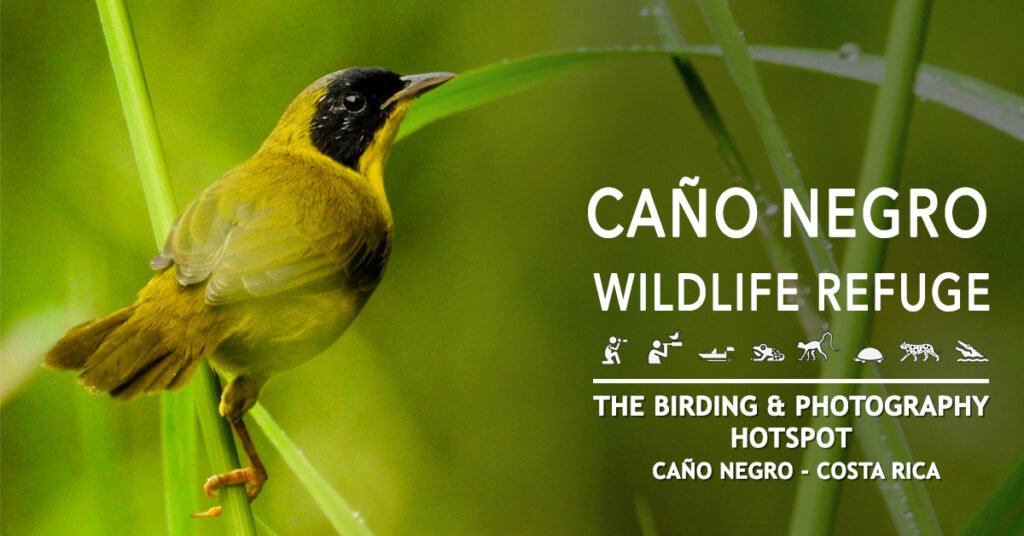
Birdwatching in Caño Negro Wildlife Refuge
Birdwatching is one of the most rewarding ways to experience Caño Negro Wildlife Refuge. The combination of freshwater lagoons, marshes, rivers, forest edges, and seasonally flooded habitats creates an exceptional environment for observing both resident and migratory birds in their natural surroundings.
For birdwatchers, Caño Negro is not simply about the number of species that can be recorded. It is about the variety of habitats within the wetland and the opportunity to explore them slowly, often from the water. A boat can provide access to areas where birds feed, rest, nest, or move between different parts of the refuge, while the quiet pace of the experience allows time for careful observation.
A Wetland Habitat for Birdwatchers
The wetlands are the foundation of Caño Negro’s bird diversity. Open water attracts waders and other aquatic birds, while marshes, riverbanks, forest channels, and flooded vegetation provide different feeding and nesting opportunities.
Birdwatchers may encounter species such as the Agami Heron, Jabiru, Sungrebe, Pinnated Bittern, Least Bittern, Snail Kite, Black-collared Hawk, Yellow-breasted Crake, Sora, and Nicaraguan Grackle, along with many other resident and migratory species.
The experience can change considerably depending on the habitat being explored, the season, water levels, weather, and time of day. This natural variation is part of what makes returning to Caño Negro so rewarding for experienced birders.
Resident and Migratory Birds
Caño Negro supports both resident birds and seasonal visitors. Some species can be observed throughout the year, while migratory birds add another dimension to the birding experience during their seasonal movements through Costa Rica.
This means that the birding experience can be different at different times of the year. Rather than expecting exactly the same species on every visit, birdwatchers can explore the refuge knowing that changing conditions may reveal different birds and behaviours.
Birdwatching From a Boat
Exploring Caño Negro by boat is one of the best ways to experience its birdlife. The refuge’s waterways provide natural routes through lagoons, marshes, forest edges, and river habitats that are difficult to reach on foot.
From a boat, birdwatchers can often approach suitable observation areas without leaving the natural environment. The slower pace also makes it easier to scan vegetation, listen for calls, identify movement, and observe birds before they disappear into the surrounding habitat.
For photographers, the water can provide additional advantages. Open backgrounds, natural reflections, and unobstructed views of birds along the shoreline can create excellent opportunities for wildlife photography without the need for artificial setups.
Birding With Time to Observe
Good birdwatching in Caño Negro is about patience rather than rushing from one sighting to the next. The refuge is a living ecosystem, and some of its most interesting encounters may happen when you stop and observe what is happening around you.
Listening for bird calls, watching the movement of birds through vegetation, and paying attention to changes in the water and surrounding landscape can reveal species that might otherwise be overlooked. The more time you spend exploring different habitats, the more opportunities you have to discover the refuge’s birdlife.
A Destination for Both Birders and Wildlife Photographers
Caño Negro is particularly well suited to travellers who combine birdwatching with wildlife photography. Many of the same habitats that attract specialist birders also provide opportunities to photograph birds and other wildlife in natural surroundings.
There is no need to separate the two experiences. A morning on the waterways can be both a birding excursion and a wildlife photography session, depending on your interests, equipment, and the conditions on the day.
For a more detailed look at the birds of the refuge and how to plan a birding visit, explore our Birding Experience in Caño Negro.
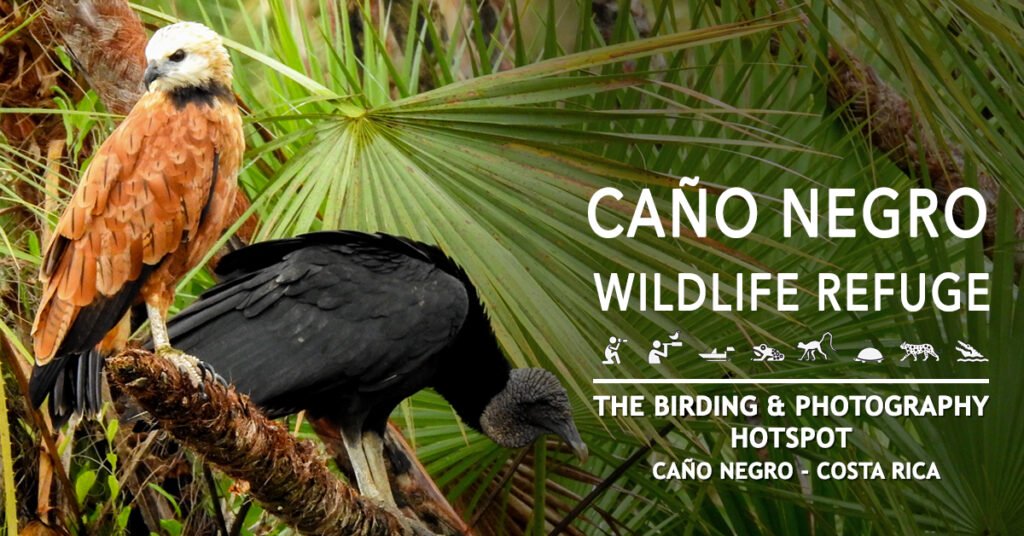
Wildlife Photography in Caño Negro
Caño Negro is an exceptional destination for wildlife photography in Costa Rica. Its combination of open lagoons, marshes, rivers, forest edges, and seasonally flooded habitats creates a constantly changing natural setting for photographing birds, mammals, reptiles, and other wildlife.
What makes photography here particularly rewarding is that the wildlife is not staged or artificially attracted. There are no feeders, artificial scenes, or controlled setups. The refuge itself provides the setting, and the photographer works with the natural behaviour, light, water, vegetation, and changing conditions of the wetland.
Why Caño Negro Is Special for Wildlife Photography
The diversity of habitats creates a wide range of photographic opportunities. Open water can provide clean backgrounds for birds, while riverbanks and forest edges offer opportunities to photograph animals within more complex natural surroundings.
The waterways are particularly valuable for photographers because many wildlife encounters can be experienced from a boat. Moving quietly through the lagoons and channels can provide changing perspectives and opportunities to photograph birds and other animals without having to leave the wetland environment.
For photographers using long telephoto lenses, the combination of open water, natural clearings, vegetation edges, and relatively unobstructed views can be especially useful. Conditions vary from one location to another, however, and successful wildlife photography always depends on the behaviour of the animals and the conditions encountered in the field.
What Can You Photograph in Caño Negro?
Birds are the main photographic attraction for many visitors. Herons, kingfishers, raptors, waterbirds, and other wetland species can provide opportunities ranging from detailed portraits to images that show birds within their natural habitat.
Birds are not the only subjects. Depending on the location and conditions, photographers may also encounter monkeys, sloths, caimans, crocodiles, iguanas, basilisk lizards, turtles, and other wildlife.
The diversity of subjects means that a day in Caño Negro can develop in unexpected ways. A morning planned around bird photography may also produce opportunities with reptiles, mammals, landscapes, or other wetland wildlife.
Photography Changes With the Seasons
The changing water levels of Caño Negro influence the photographic experience. During periods of higher water, waterways can open access to different parts of the wetland, while lower water levels may concentrate wildlife around remaining lagoons, channels, and feeding areas.
Light and weather also change throughout the year. Cloudy skies, early morning light, reflections on the water, mist, rain, and changing vegetation can all contribute to different photographic opportunities.
This natural variation is one of the reasons why Caño Negro can reward photographers who return at different times of the year. The same location can look and behave very differently under different environmental conditions.
Wildlife Photography From the Water
Boat-based photography is an important part of the Caño Negro experience. The waterways allow photographers to move through habitats that would otherwise be difficult to access, while the boat provides a mobile observation platform.
Good photography, however, depends on more than simply getting close to an animal. Understanding wildlife behaviour, anticipating movement, choosing the right position, and allowing the animal to remain undisturbed are all part of responsible wildlife photography.
For photographers using large telephoto lenses, the ability to spend extended periods on the water can also make a significant difference. Patience and time in the field often produce better results than simply trying to maximise the number of sightings.
The Refuge Is the Stage
In Caño Negro, the refuge itself is the stage. There are no artificial feeders, staged scenes, or controlled wildlife encounters. The objective is to photograph animals as they naturally behave within the wetland ecosystem.
This approach creates a very different kind of photography experience. You are not photographing a prepared scene—you are responding to a living ecosystem. The weather, water, light, wildlife behaviour, and landscape all become part of the photographic process.
For photographers who want to go beyond a conventional wildlife excursion, Hotel de Campo offers specialised wildlife photography experiences in Caño Negro, combining field time, local knowledge, and an environment designed around natural wildlife observation rather than artificial setups.
Birding & photography packages at Hotel de Campo
At Hotel de Campo, we understand that every birder is different. Some have limited time and want a focused experience. Others want to immerse themselves in the refuge for days. That’s why we offer three dedicated birding packages, each designed to match your schedule, interests, and goals.
All packages include:
- Private boat tours — exclusively for you and your group
- Expert local guides — who know the best spots for target species
- Comfortable accommodation — inside the refuge, in front of the lagoon
- All meals included — so you can focus on birding, not logistics
Packages with Private Boat Tour — Guarantee
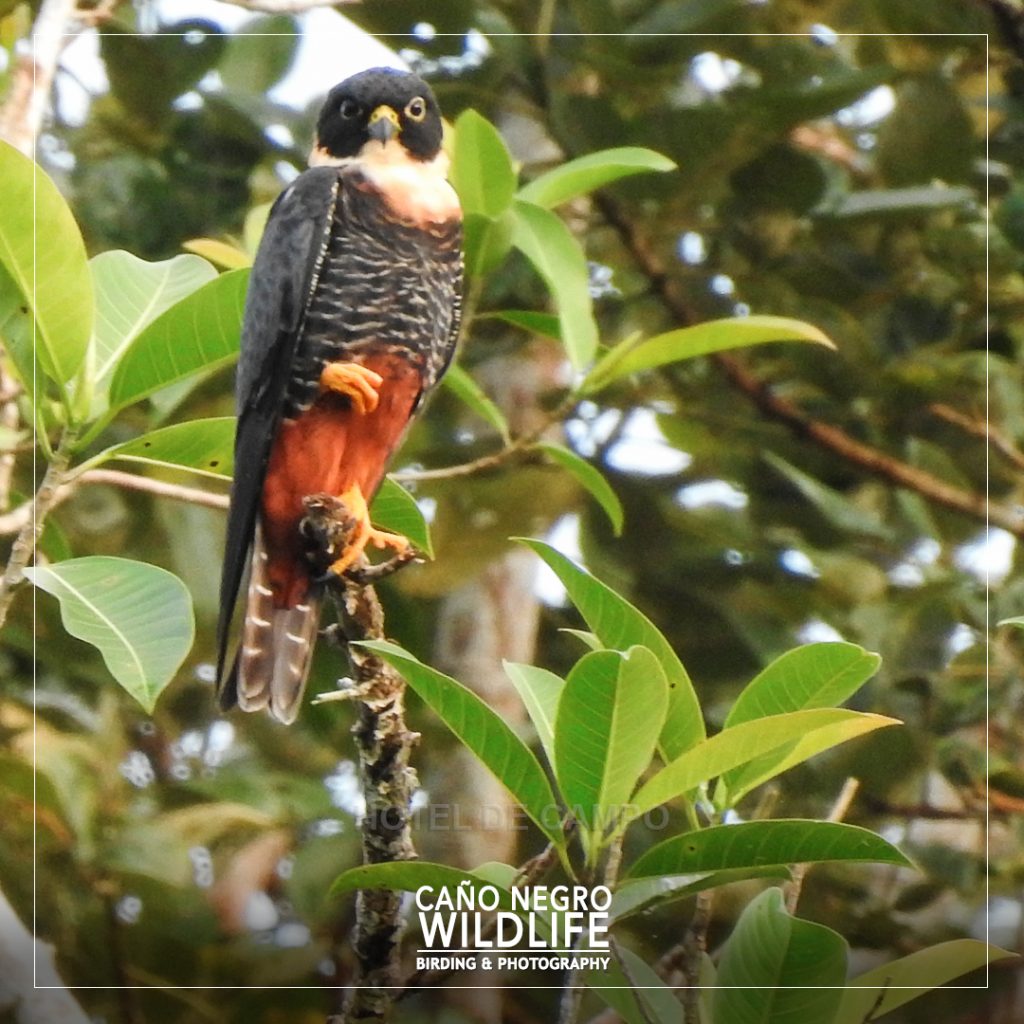
Bat Falcon Pack
1 Night / 2 Days
Perfect for: Birders with limited time who want a focused, private experience.
- 2 private boat tours (3h afternoon + 4h sunrise)
- 1 night at Hotel de Campo
- 1 dinner and 1 breakfast
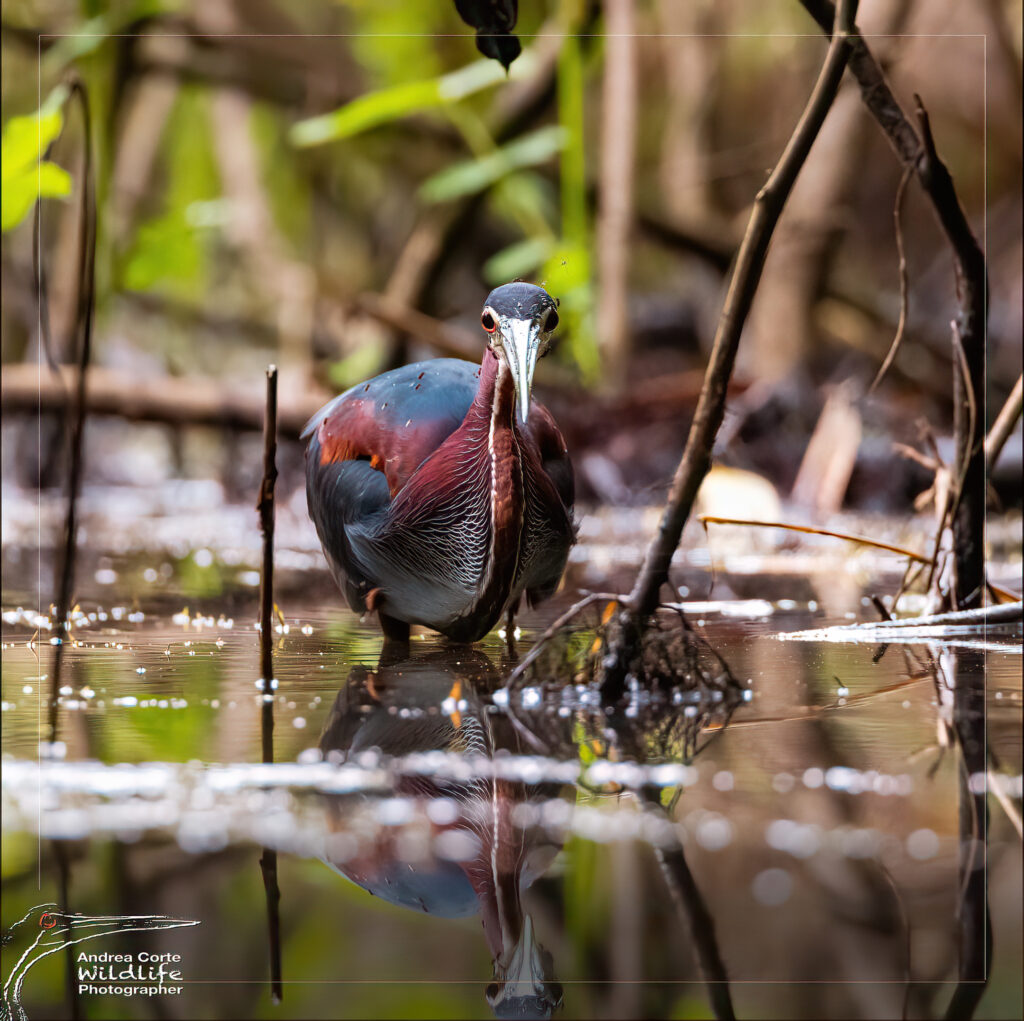
The Agami Pack
2 Nights / 3 Days
Perfect for: Birders who want more time in the field and a relaxed pace.
- 2 private boat tours (3h afternoon + 4h sunrise)
- 2 nights at Hotel de Campo
- 2 dinners and 2 breakfasts
- Extra free time to explore the garden or book additional activities
The Jabiru Pack
3 Nights / 4 Days
Perfect for: Dedicated birders and photographers seeking an immersive experience.
- Up to 12 hours of private boat tours
- 3 nights at Hotel de Campo
- 3 dinners and 3 breakfasts
- Maximum flexibility — your pace, your schedule, your focus
Exploring Caño Negro Refuge by Boat
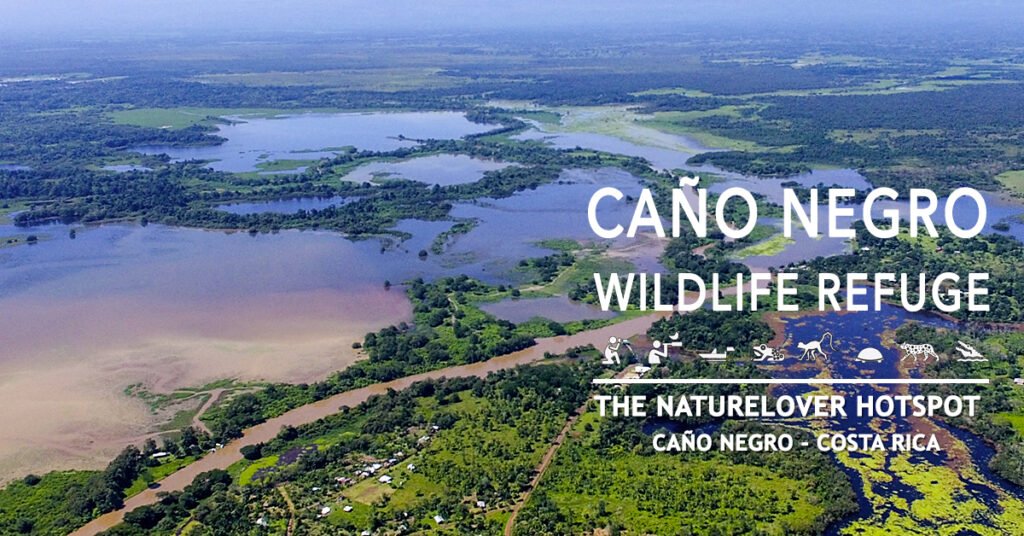
Exploring Caño Negro by boat is one of the best ways to experience the heart of the wildlife refuge. Much of the protected area consists of lagoons, marshes, rivers, and interconnected waterways, making the water an essential part of understanding and exploring this unique wetland ecosystem.
Rather than following conventional hiking trails, visitors can travel slowly through lagoons, natural channels, riverbanks, and flooded areas, observing the landscape and wildlife from the water. The experience is as much about discovering the wetland itself as it is about looking for individual animals.
Why Explore Caño Negro by Boat?
The waterways provide access to habitats that are difficult to reach on foot. From the boat, visitors can move through different parts of the wetland while remaining close to the natural environment.
The slower pace also makes it possible to observe wildlife without rushing from one location to another. Birds may appear along the shoreline, monkeys may move through the trees, and reptiles can often be found resting near the water. What you encounter depends on the season, water conditions, weather, and the natural behaviour of the animals.
For birdwatchers and photographers, the boat is particularly useful because it allows time to scan the vegetation, listen for calls, watch animal behaviour, and look for photographic opportunities while moving through several different habitats.
What Can You See From a Boat?
Birds are among the most common and rewarding subjects encountered from the waterways. Herons, kingfishers, raptors, waterbirds, and other species may be found around lagoons, marshes, riverbanks, and forest edges.
The waterways can also provide opportunities to observe monkeys, sloths, caimans, crocodiles, iguanas, turtles, and other wildlife. Some animals may remain in vegetation along the banks, while others may be seen directly in or beside the water.
One of the attractions of a boat excursion is that the experience is not limited to a fixed list of wildlife sightings. The changing landscape and natural behaviour of the animals make each excursion different.
Water Levels Shape the Experience
Water levels are an important part of exploring Caño Negro. The refuge is a dynamic wetland, and seasonal rainfall and flooding can change the accessibility and appearance of its waterways.
When water levels are higher, different channels and flooded areas may become accessible. During drier periods, water can become concentrated in lagoons and remaining channels, changing where wildlife gathers and how the landscape looks.
This means that the same boat route can offer a different experience at different times of the year. Rather than being a fixed attraction, the wetland changes with its natural cycles.
Private and Shared Boat Experiences
Visitors can explore Caño Negro through different types of boat experiences, depending on their interests, schedule, and preferred level of flexibility.
A shared excursion can be a practical way to discover the refuge, while a private boat experience provides greater flexibility for birdwatchers, photographers, families, and travellers with specific interests. A private excursion can allow more time at interesting locations and make it easier to adapt the pace to wildlife activity and photographic opportunities.
For specialist birdwatchers and photographers, time and flexibility can be particularly valuable. Wildlife does not follow a timetable, and the ability to slow down, wait, or spend more time in a productive area can make a significant difference.
Full-Day or Overnight?
Caño Negro 1 Day boat Tour? We offer a smarter way to experience the Refuge
A full-day Caño Negro tour does not necessarily mean spending the whole day in Caño Negro. For many travellers, a full-day excursion from another destination also means spending several hours travelling to and from the refuge. Those are hours that could instead be spent exploring the wetlands, watching wildlife, and enjoying the destination itself.
Staying overnight changes the experience completely. Instead of travelling for hours just to reach Caño Negro and then having to leave the same day again, you can arrive, settle in, and spend your time actually experiencing the refuge.
For example, an overnight stay allows you to explore the refuge in the afternoon and return to the waterways early the following morning, when bird activity and wildlife observation can be particularly rewarding. You also have more time to adapt your plans to weather, water conditions, wildlife activity, and your own interests.
This is especially important for birdwatchers and wildlife photographers. A few extra hours in the field can make a significant difference when your subjects are wild animals whose behaviour cannot be scheduled.
At Hotel de Campo, staying overnight means spending your time in Caño Negro rather than spending it travelling to Caño Negro. You can stay directly in the refuge area, enjoy the hotel and its surroundings, and organise your boat excursions around the best use of your time.
If Caño Negro is your destination, staying in Caño Negro makes more sense than spending hours travelling back and forth just to take a day tour.
Read our guide to the Full-Day Caño Negro Wildlife Refuge Boat Tour to understand what a full-day experience involves and whether it is the right option for your visit.
Caño Negro for Nature Lovers
Caño Negro is not only a destination for serious birdwatchers and wildlife photographers. It is also an exceptional place for nature lovers who simply want to slow down, explore a remarkable wetland, and experience the wildlife, landscapes, waterways, and peaceful atmosphere of northern Costa Rica.
Nature lovers experience Caño Negro differently from visitors travelling with a specific wildlife target. Instead of focusing on finding a particular bird or photographing a particular species, the objective is to enjoy the complete experience: travelling through the waterways, observing wildlife, discovering the changing wetland landscape, and having time to appreciate the natural environment.
What Is a Nature Lover Experience?
A Nature Lover experience is about discovering Caño Negro without having to be an expert birder or photographer. You do not need to know the names of hundreds of bird species or carry professional camera equipment to appreciate what makes the refuge special.
You can simply enjoy the boat journey through the wetlands, the surrounding forests and lagoons, the wildlife along the waterways, the sounds of the tropical landscape, and the opportunity to disconnect from the busy tourist routes of Costa Rica.
This makes Caño Negro particularly attractive to couples, families, first-time wildlife travellers, and anyone looking for a genuine nature experience rather than a conventional sightseeing excursion.
Nature Lovers and Specialist Wildlife Experiences
Caño Negro can accommodate very different types of visitors. Birdwatchers may spend hours identifying species, photographers may wait patiently for the right behaviour or light, while Nature Lovers can enjoy the same environment without the pressure of pursuing a specific target.
The difference is not the destination. Everyone experiences the same protected wetland; what changes is the way you choose to experience it.
For this reason, Hotel de Campo offers Nature Lover experiences alongside more specialised birdwatching and wildlife photography experiences. The goal is to match the experience with the interests and expectations of each traveller.
Why Nature Lovers Benefit from Staying Overnight
For Nature Lovers, staying overnight can be particularly rewarding because there is no need to treat Caño Negro as a rushed day excursion. More time allows you to slow down, enjoy the surroundings, explore the waterways, and experience the refuge at different times of day.
Instead of spending valuable hours travelling back to another destination, you can spend that time actually enjoying Caño Negro. An afternoon boat excursion can be followed by a relaxed evening at Hotel de Campo, with another opportunity to experience the wetlands the following morning.
This is what makes a Nature Lover stay different from simply taking a wildlife tour. The refuge becomes the destination, rather than just one activity on a busy Costa Rica itinerary.
Nature Lover Packages in Caño Negro
Hotel de Campo offers Nature Lover packages designed for travellers who want to experience Caño Negro without the specialist focus of a birding or photography programme. Depending on how much time you have, these experiences can be arranged as part of a short overnight stay or a longer visit to the refuge.
The longer you stay, the more opportunity you have to slow down, enjoy the hotel and its natural surroundings, explore the wetlands, and experience Caño Negro without rushing.
For travellers who want more than a day trip, our Nature Lover packages combine accommodation with guided experiences designed to let you discover Caño Negro at a relaxed pace.
Explore our Nature Lover packages to find the experience that best fits the time you have available.
EcoLovers Packages for your Ecotourism Vacation Costa Rica
- Shared boat tours, but Never Crowded Tour
- Expert local guides — who know the best spots for target species
- Comfortable accommodation — inside the refuge, in front of the lagoon
- Meals included
Packages with Shared Boat Tour
Bat Basilisk Pack
1 Night / 2 Days
Perfect for: Nature lovers who want a relaxed introduction to Caño Negro without the specialist focus of birding or photography.
- 1 guided shared boat tour of 3 hrs
- 1 night at Hotel de Campo
- 1 dinner
- 1 breakfast
The Caiman Pack
2 Nights / 3 Days
Perfect for: Nature lovers who want more time to explore Caño Negro at a relaxed pace and experience the wetlands without rushing.
- 1 shared boat tours, 3 hrs
- 2 nights at Hotel de Campo
- 2 dinners
- 2 breakfasts
The Monkey Pack
3 Nights / 4 Days
Perfect for: Nature lovers who want to immerse themselves in Caño Negro and enjoy the wetlands at a slower, more relaxed pace.
- 3 nights at Hotel de Campo, just in front of one of the largest lagoons of Caño Negro Refuge
- 3 dinners
- 3 breakfasts
- 2 shared boat tours (3h each) inside the Caño Negro Wildlife Refuge
When Is the Best Time to Visit The Refuge of Caño Negro?
There is no single best time to visit Caño Negro. The refuge is a dynamic wetland, and its character changes with rainfall, water levels, vegetation, wildlife activity, and the arrival and departure of migratory birds. The best time for you will depend largely on what you want to experience.
The Drier Season
During the drier months, water levels can decrease and wildlife may become more concentrated around remaining lagoons, channels, and other sources of water. These conditions can sometimes make certain animals easier to locate and may create excellent opportunities for wildlife observation and photography.
The drier conditions can also make travel in the surrounding region more predictable. For visitors combining Caño Negro with other destinations in northern Costa Rica, this can make planning a multi-destination itinerary easier.
For birdwatchers, however, drier conditions do not automatically mean better birding. The species present, their behaviour, and the habitats available still depend on many environmental factors.
The Rainier Season
The wetter months can transform the refuge. Higher water levels can reconnect lagoons, channels, marshes, and flooded areas, creating a very different landscape from the one visitors may encounter during drier periods.
Rain can also bring changes in wildlife activity and vegetation. For travellers who enjoy experiencing wetlands as a living ecosystem, the wetter season can be especially interesting.
Rain does not necessarily mean that wildlife experiences stop. Caño Negro is a wetland, and water is fundamental to its ecology. The key is to be prepared for changing weather, muddy conditions, and a more unpredictable travel experience.
Water Levels and Wildlife
Water levels are one of the most important factors influencing the Caño Negro experience. The wetland changes as water rises and falls, affecting navigation, feeding areas, vegetation, and the distribution of wildlife.
Higher water can open access to channels and flooded areas that may be difficult to navigate when water levels are lower. Conversely, receding water can concentrate wildlife around smaller lagoons and remaining waterways.
This is why Caño Negro should not be viewed as a static attraction. The refuge is constantly changing, and part of its appeal is discovering what conditions the wetland is offering when you arrive.
Best Time for Birdwatching
Birdwatching can be excellent throughout the year. Resident species are present in different habitats year-round, while migratory birds add seasonal variety to the birding experience.
For birdwatchers, the best conditions depend on the combination of bird activity, water levels, weather, habitat, and time of day. Early mornings are generally particularly valuable for birding because many species are active and temperatures are cooler.
If your main objective is birdwatching, it is often more useful to plan around the type of experience you want rather than simply choosing the driest month.
Best Time for Wildlife Photography
Photographers can find opportunities throughout the year. Changing water levels, weather, vegetation, light, and wildlife behaviour mean that different seasons can produce very different images.
The drier season may offer more concentrated wildlife around remaining water, while wetter conditions can provide reflections, lush vegetation, flooded landscapes, and access to different parts of the wetland.
For wildlife photographers, the best time may therefore be the period that matches your preferred subjects and photographic style. Returning to Caño Negro under different conditions can reveal an entirely different landscape.
So, When Should You Visit?
Visit during the drier season if you prefer more predictable travel conditions and potentially concentrated wildlife. Choose the wetter season if you are interested in experiencing the refuge as a more expansive, water-filled wetland and are comfortable with changing weather.
If birdwatching or wildlife photography is your priority, the best time is ultimately the time that matches your target species, preferred habitats, and photographic or birding goals.
Whatever season you choose, allow enough time to explore the refuge without rushing. Caño Negro rewards travellers who slow down and let the wetland reveal itself.
How to Get to Caño Negro Wildlife Refuge
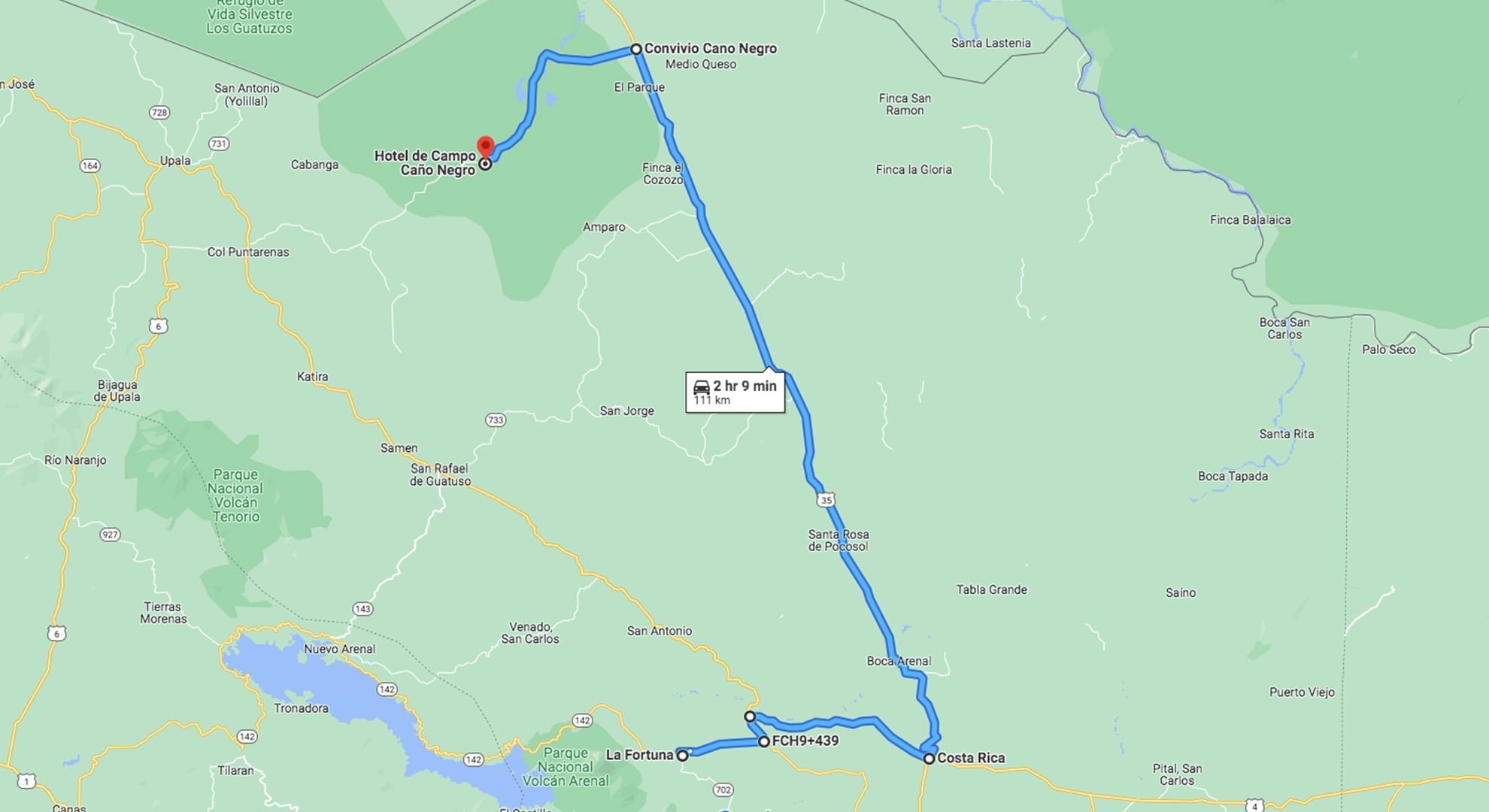
Getting to Caño Negro is part of the experience. The refuge is located in the northern lowlands of Costa Rica, away from the country’s main tourist corridors, and reaching the community of Caño Negro requires travelling through a more rural landscape.
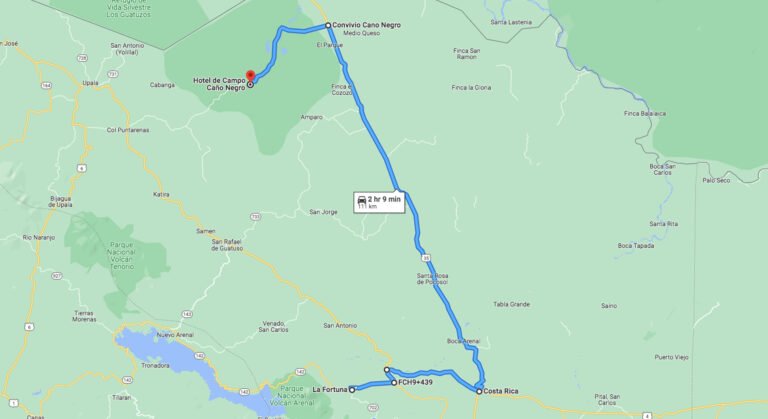
Most visitors arrive by road through Los Chiles, Upala, or the Arenal and La Fortuna region, depending on where they are travelling from. The best route for you will depend on your itinerary, road conditions, weather, and whether Caño Negro is part of a larger journey through northern Costa Rica.
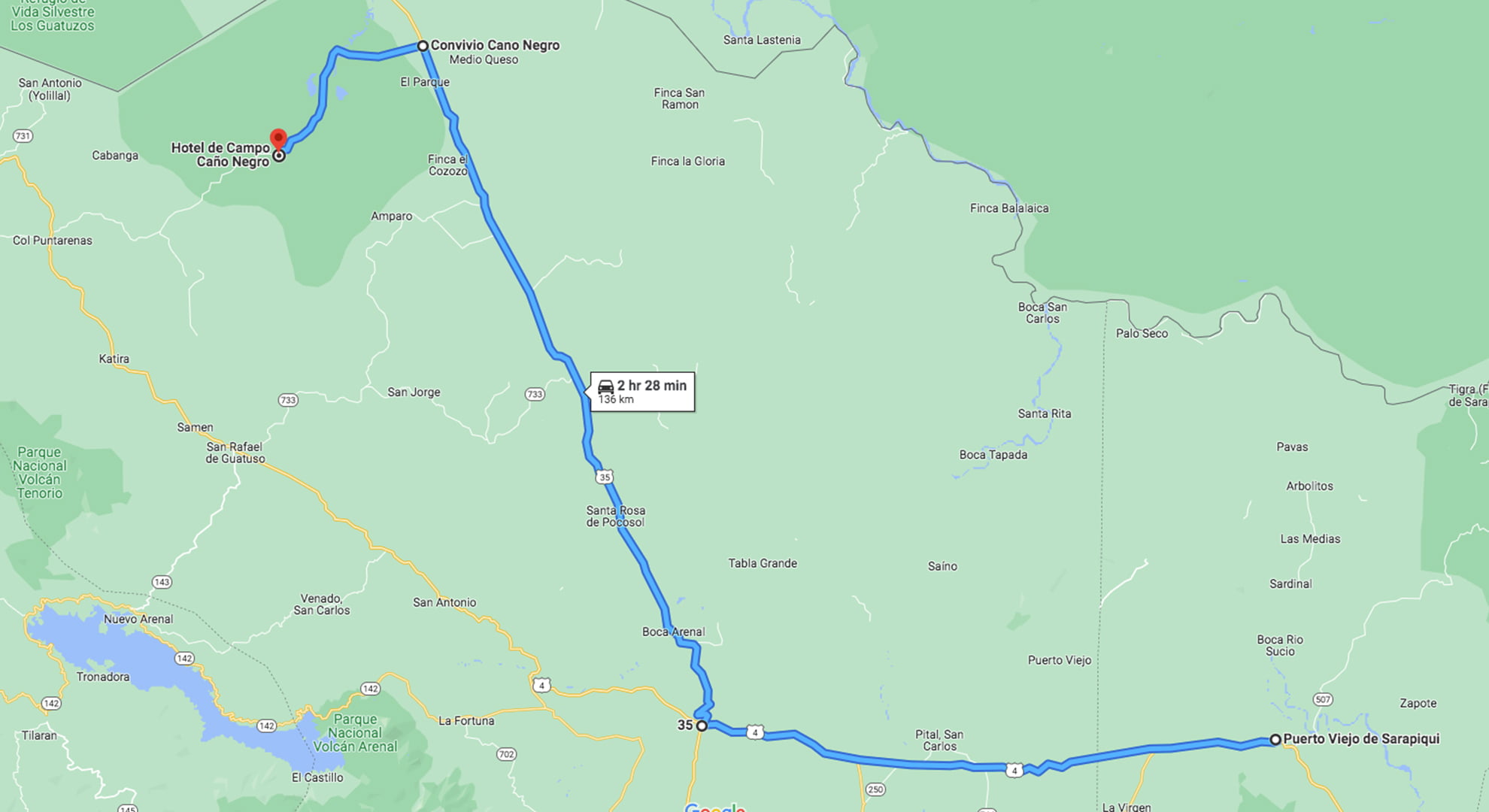
From La Fortuna and the Arenal Area
Caño Negro can be reached from the La Fortuna and Arenal area by road. This is one of the most common approaches for travellers who want to combine the wildlife refuge with Arenal Volcano and other attractions around La Fortuna.
The journey takes you away from the more developed tourist areas and towards the rural landscapes and wetlands of northern Costa Rica. Road conditions can vary, particularly during periods of heavy rain, so it is important to allow enough time rather than planning the journey too tightly.
From Los Chiles
Los Chiles is one of the main access points to the northern region around Caño Negro. The town is located north of the refuge and provides services and transport connections for travellers exploring this part of Costa Rica.
From Los Chiles, the road continues towards the community of Caño Negro, which is located within the protected area and serves as an important gateway for exploring the refuge.
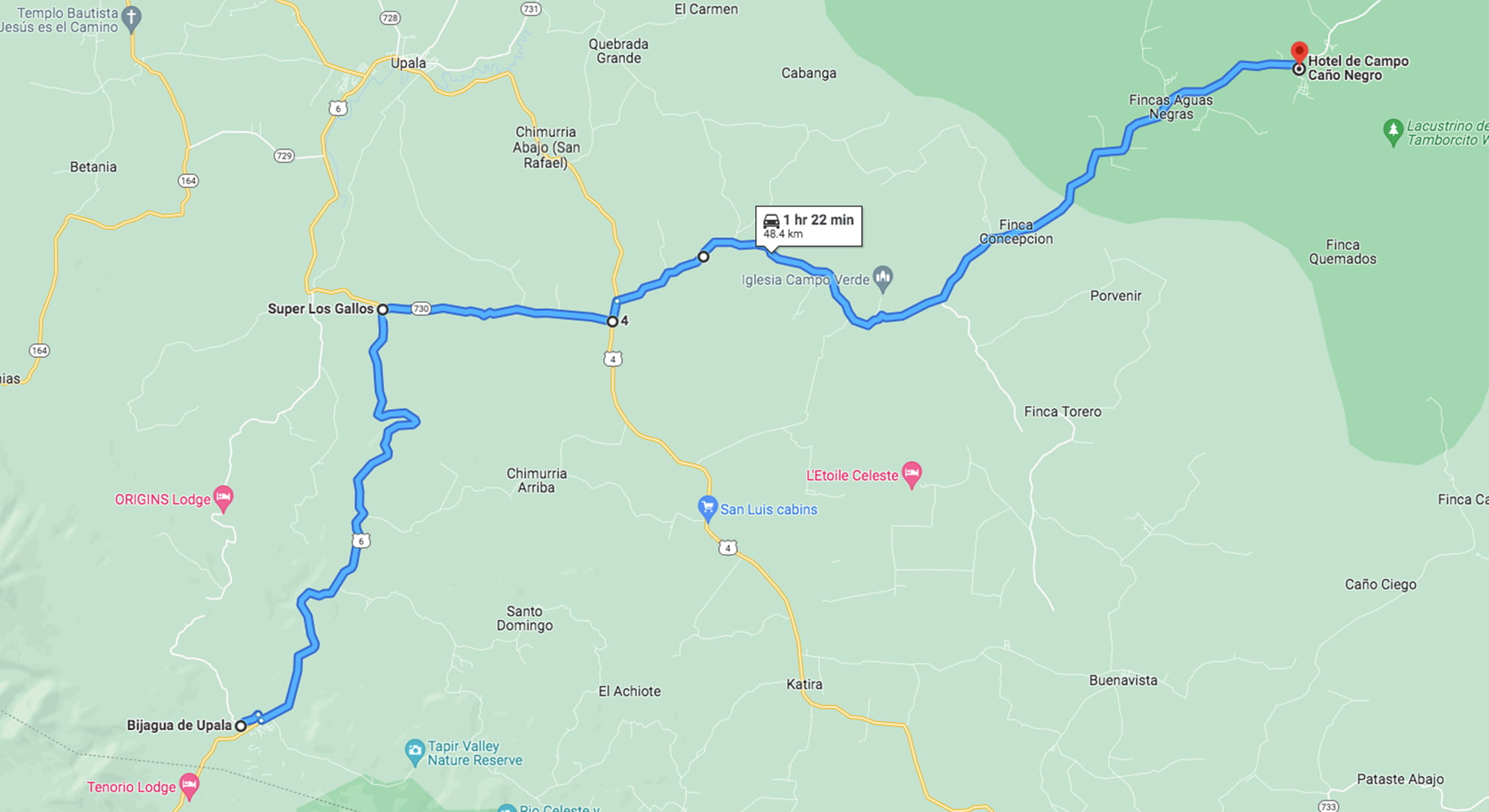
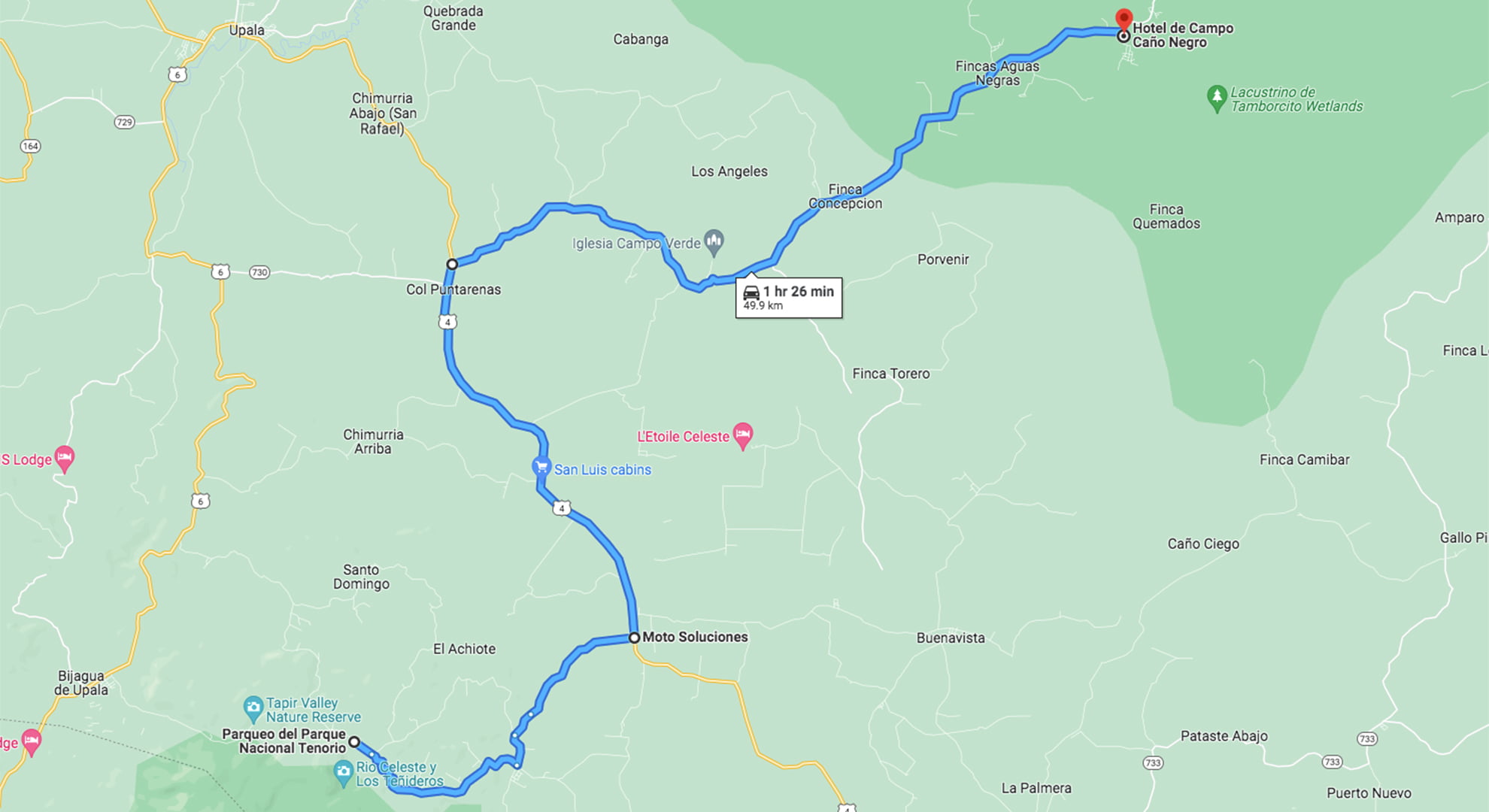
From Upala and Bijagua
Travellers coming from Upala, Bijagua, or the Tenorio Volcano area can also reach Caño Negro by road. This can be a practical option when Caño Negro is combined with destinations such as Bijagua, Río Celeste, or other parts of the northern lowlands.
Because road conditions and travel times can vary, particularly during the rainy season, check current local conditions before setting out and allow additional time when travelling between destinations.
Do You Need a 4×4?
A 4×4 or high-clearance vehicle can be useful when travelling to Caño Negro, particularly during wetter periods. Some roads in the surrounding region are rural and can become muddy or difficult after heavy rainfall.
Whether you actually need four-wheel drive depends on your route, the season, recent weather, and current road conditions. Travellers should not assume that conditions are the same throughout the year.
If you are not comfortable driving rural roads, another option is to arrange transportation as part of your Caño Negro experience. This can be particularly convenient if you are staying locally and planning boat tours or other activities.
Arriving in Caño Negro
The community of Caño Negro is the natural gateway to the wildlife refuge. Once you arrive, the experience changes from a road journey to a wetland adventure, with lagoons, waterways, marshes, and wildlife becoming the focus of your visit.
For visitors staying overnight, Hotel de Campo provides accommodation and can help organise your Caño Negro experience in one place, including boat excursions and other nature activities.
Plan your route carefully, allow enough travel time, and remember that Caño Negro is a remote wetland destination rather than a conventional roadside attraction. That sense of remoteness is part of what makes the refuge special.
Planning Your Visit to Caño Negro Refuge
A little planning can make a significant difference to your Caño Negro experience. The refuge is a remote wetland destination, and the best way to enjoy it is to allow enough time to explore without rushing from one activity to another.
How Many Days Do You Need in Caño Negro?
One day can give you a rewarding introduction to Caño Negro, while staying overnight allows you to experience the destination at a slower pace. The right choice depends on your interests, available time, and whether you are primarily interested in wildlife, birdwatching, photography, or simply experiencing the wetland.
A full-day visit can work well for travellers who have limited time and want to explore the refuge by boat. However, birdwatchers and wildlife photographers often benefit from staying longer, as additional time creates more opportunities to explore different habitats and observe wildlife under changing conditions.
If you are considering the two options, see our guide to Full-Day vs. Overnight Caño Negro experiences.
Where Should You Stay?
Staying close to the refuge allows you to spend more time experiencing Caño Negro rather than travelling to and from another destination. This can be particularly valuable for birdwatchers and photographers who want to be on the water early in the day or remain flexible when wildlife activity is good.
Hotel de Campo Caño Negro offers accommodation within the Caño Negro area, together with access to boat tours, birdwatching experiences, wildlife photography, meals, and other services. Having these elements available in one place can simplify planning your stay.
What Should You Bring?
Pack for a tropical wetland environment. Lightweight, breathable clothing, comfortable footwear, sun protection, insect repellent, and protection for cameras and other electronic equipment are useful throughout the year.
For boat excursions, consider bringing a hat, sunglasses, sunscreen, drinking water, binoculars, and a rain jacket or waterproof layer. Conditions can change quickly, particularly during the wetter months.
Birdwatchers should also bring binoculars and a field guide or bird identification app. Photographers should protect equipment from rain, humidity, splashes, and sudden changes in weather.
What Shoes Should You Wear?
Comfortable shoes suitable for wet and muddy conditions are the safest choice. Even during periods with less rainfall, some areas around the wetlands can remain damp or muddy.
If you are combining boat excursions with walking or exploring around the property, lightweight footwear with good grip can be particularly practical.
What About Mosquitoes and Insects?
Caño Negro is a tropical wetland, so insects are part of the natural environment. Mosquito activity can vary depending on rainfall, water conditions, time of day, and location.
Using insect repellent, lightweight long sleeves, and long trousers can make time outdoors more comfortable. It is also useful to keep doors and windows screened or closed when appropriate, particularly around dawn and dusk.
Can You Visit Caño Negro During Rainy Weather?
Yes. Rain does not automatically mean that a visit to Caño Negro should be cancelled. The refuge is a wetland, and rainfall is an important part of the ecosystem that creates the conditions many species depend upon.
However, rain can affect road conditions, water levels, visibility, and the comfort of outdoor activities. A flexible itinerary and appropriate clothing can make a significant difference during wetter periods.
Is Caño Negro Suitable for Families?
Caño Negro can be an excellent destination for families who enjoy nature and wildlife. Exploring the wetlands by boat can be an engaging way for children and adults to observe birds, reptiles, monkeys, and other wildlife without requiring long hikes.
Families should take into account the length of the boat excursion, weather conditions, children’s tolerance for heat and insects, and the availability of suitable breaks when planning their visit.
Is Caño Negro Suitable for Solo Travellers?
Solo travellers can also enjoy Caño Negro**, particularly those interested in birdwatching, wildlife, photography, or quiet nature experiences.
For independent travellers, arranging transportation, accommodation, and guided activities in advance can make the experience considerably easier, especially because the refuge is located away from Costa Rica’s main tourist centres.
Allow Time to Experience the Refuge
The most important part of planning a Caño Negro visit is not trying to fit too much into too little time. The refuge is best experienced slowly, allowing time to observe wildlife, explore the waterways, and appreciate the changing wetland landscape.
Whether you visit for one day or stay overnight, give yourself enough time to let Caño Negro become more than just another stop on your Costa Rica itinerary.
Staying at the Caño Negro Wildlife Refuge
Staying at the Caño Negro Wildlife Refuge allows you to experience more of the destination and spend less time travelling between activities. This can be especially valuable for birdwatchers, wildlife photographers, and travellers who want to explore the wetlands at a relaxed pace.
Why Stay Overnight in Caño Negro?
A day trip can introduce you to the refuge, but staying overnight gives you more time to experience Caño Negro as a destination rather than simply visiting it as an excursion.
Additional time allows you to explore the waterways without having to rush back to another destination. It can also make it easier to take advantage of early morning wildlife activity, changing light, different water conditions, and additional opportunities for birdwatching and photography.
For photographers and serious birdwatchers, this extra time can be particularly valuable. Wildlife does not follow a fixed schedule, and having more time in the field increases the opportunity to observe natural behaviour and explore different habitats.
Hotel de Campo Caño Negro
Hotel de Campo Caño Negro is located within the Caño Negro area, providing accommodation and nature experiences close to the wildlife refuge. The hotel is designed to make it easier for visitors to organise their stay, combining accommodation with services and activities in one place.
Guests can arrange boat tours, birdwatching experiences, wildlife photography activities, meals, and accommodation without having to organise each part of the experience with different providers.
This is particularly convenient for travellers whose main reason for visiting Caño Negro is wildlife, birdwatching, photography, or exploring the wetlands by boat.
One Place to Organise Your Caño Negro Experience
One of the advantages of staying at Hotel de Campo is having the main elements of your Caño Negro visit in one place. Instead of treating accommodation, meals, transportation, and activities as separate arrangements, guests can organise their experience around the time they have available and the activities they want to prioritise.
For visitors staying more than one night, this also provides greater flexibility to adapt plans to weather, water levels, wildlife activity, and personal interests.
Whether your priority is a boat excursion, birdwatching, wildlife photography, or simply experiencing the northern wetlands of Costa Rica, staying close to the refuge gives you more time to enjoy what brought you to Caño Negro in the first place.
Choosing Between a Day Trip and an Overnight Stay
A full-day visit may be enough if your schedule is limited. An overnight stay is generally more appropriate for travellers who want a deeper experience, particularly birdwatchers and photographers who benefit from additional time in the field.
The choice ultimately depends on your itinerary and priorities. If Caño Negro is one of the main reasons for your trip, staying overnight can turn a brief wildlife excursion into a much more complete nature experience.
Explore Hotel de Campo Caño Negro to see the accommodation, services, and experiences available for your stay.
Conservation and Sustainable Tourism in Caño Negro
Caño Negro Wildlife Refuge is a protected wetland whose conservation depends on maintaining the natural balance between water, forests, wildlife, and local communities. Visiting the refuge therefore means entering an ecosystem where responsible tourism plays an important role.
Protecting a Unique Wetland
The wetlands of Caño Negro provide essential habitat for wildlife and support important ecological processes. Lagoons, marshes, waterways, and seasonally flooded forests are interconnected, creating the conditions that allow a remarkable diversity of species to survive.
Protecting this system means looking beyond individual animals or attractions. Conservation also means protecting water quality, natural vegetation, wildlife habitats, and the seasonal processes that keep the wetland functioning.
Responsible Wildlife Observation
Wildlife should always be observed without disturbing its natural behaviour. Visitors can help protect the refuge by maintaining an appropriate distance from animals, avoiding unnecessary noise, and never attempting to feed or attract wildlife.
For photographers, this principle is particularly important. A good wildlife photograph should never come at the expense of the animal’s welfare. The objective is to document natural behaviour rather than manipulate an encounter for a better photograph.
Exploring the Refuge Responsibly
Responsible tourism begins with respecting the protected area and the people who work to conserve it. Visitors should follow the regulations and guidance provided for the refuge, remain within permitted areas, and avoid leaving rubbish or damaging vegetation.
Boat excursions should also be conducted with respect for wildlife, waterways, and other visitors. Moving carefully through the wetlands helps preserve the experience for both wildlife and future travellers.
Tourism and the Local Community
Tourism also creates an important connection between conservation and the local community. Guides, boat operators, accommodation providers, restaurants, and other local businesses all form part of the tourism economy surrounding Caño Negro.
Choosing local services can help ensure that the economic benefits of visiting the refuge remain connected to the communities that live alongside this protected ecosystem.
Hotel de Campo and Responsible Nature Tourism
At Hotel de Campo, the natural environment is an essential part of the guest experience. The property combines accommodation with opportunities to experience the wetlands, wildlife, birdwatching, photography, and local food in a setting closely connected to the surrounding landscape.
The goal is not simply to bring visitors to Caño Negro, but to help them understand and appreciate the ecosystem they have come to experience. A deeper connection with the landscape can encourage visitors to value its protection long after their stay.
Responsible tourism is ultimately about enjoying Caño Negro while helping preserve the reasons it is worth visiting.
Caño Negro vs. Other Costa Rica Wildlife Destinations
Costa Rica has many outstanding wildlife destinations, but each offers a different type of nature experience. Caño Negro stands out because of its extensive freshwater wetlands, seasonal flooding, lagoons, and waterways, creating an environment that is very different from the country’s better-known rainforest destinations.
Caño Negro vs. Arenal and La Fortuna
Arenal and La Fortuna are among Costa Rica’s most popular destinations, known for the volcano, rainforest, hot springs, adventure activities, and a wide range of tourist services.
Caño Negro offers a different experience. Instead of focusing on volcanoes and rainforest trails, the refuge is centred around wetlands, waterways, lagoons, and wildlife observation. Travellers who combine both destinations can experience two very different ecosystems within northern Costa Rica.
Caño Negro vs. Tortuguero
Both Caño Negro and Tortuguero are important wetland destinations explored extensively by boat, but their ecosystems are quite different.
Tortuguero is famous for its Caribbean coastal environment, rainforest, canals, and sea turtles. Caño Negro is an inland freshwater wetland dominated by the Río Frío, lagoons, marshes, and seasonally flooded habitats.
For travellers particularly interested in freshwater wetlands, birdwatching, inland wildlife, and wildlife photography, Caño Negro offers a distinctly different experience.
Caño Negro vs. Corcovado
Corcovado National Park is renowned for its extraordinary rainforest biodiversity and is one of Costa Rica’s most important destinations for visitors seeking a deep tropical forest experience.
Caño Negro is different in both landscape and experience. Its open lagoons, marshes, waterways, and flooded forests create much more aquatic surroundings, and many wildlife experiences take place from a boat rather than along rainforest trails.
Travellers interested in wildlife can therefore find value in both destinations, but Caño Negro is particularly appealing if wetlands, waterbirds, and boat-based wildlife observation are among your priorities.
Why Choose Caño Negro?
Choose Caño Negro if you want to experience one of Costa Rica’s most distinctive freshwater wetland ecosystems. It is particularly well suited to travellers interested in birdwatching, wildlife photography, boat excursions, and quieter nature experiences away from the country’s busiest tourist destinations.
Its combination of lagoons, marshes, rivers, forests, wildlife, and local community creates an experience that is difficult to reproduce elsewhere in Costa Rica.
For many travellers, the greatest attraction is precisely that Caño Negro feels different: less conventional, more specialised, and deeply connected to the natural rhythms of a living wetland.
Let's know some insight of the National Wildlife Refuge Caño Negro
The National Wildlife Refuge Caño Negro is the most significant wetland in Costa Rica, located in the northern plane. This magnificent refuge is about 10,000 hectares. It naturally incorporates several unique ecosystems, such as a lagoon system, navigable rivers, creeks, rainforests, extensive marsh, and open and semi-open environments. Since 1991 Caño Negro Refuge is part of the Ramsar Convention. To visit Caño Negro Refuge, you have to drive to Caño Negro village. A small town surrounded by the refuge.
Because Caño Negro Refuge is a wetland with such different ecosystems and contrasting seasons, this protected area evolved into one of the most visited by Nature-lovers, birdwatchers, and any kind and active photographer. If one or all of these specific activities are your things, this is the right place to explore.
Contact us
Need a Custom Birding or Photography Trip?
Looking for more time in the field, a different combination of tours, extra nights or a specific wildlife target? Contact us and we’ll help design a custom birdwatching or wildlife photography experience in Caño Negro around your interests and schedule.
- All-in-one services: Lodging, meals, private guided tours, transportation, and activities.
- Private & Shared tours: Personalised experiences with expert local guides.
- Responsible tourism: Committed to conservation and eco-sustainability.
- Variety of options: From wildlife expeditions to cultural experiences.
- Flexible planning: Custom packages based on your interest – birding, photography, wildlife, or eco-adventure.
Why Book Direct at Hotel de Campo Caño Negro?
- Best Price Guarantee: Booking directly with us is cheaper than online platforms.
- Real People, Real Support: Our team personally answers your questions and helps you plan every detail.
- Fully Customised: Your package, your pace, your interests — no rigid itineraries.
- Since 1998: Over 25 years of experience guiding birders and photographers in Caño Negro.
Cano Negro Wildlife Refuge Facts
Yes, especially if you are interested in wildlife, birdwatching, photography, and wetlands. Caño Negro offers a very different experience from Costa Rica’s better-known rainforest and volcano destinations, with lagoons, marshes, waterways, and seasonally flooded forests forming the heart of the refuge.
Caño Negro is particularly famous for its wetlands and exceptional wildlife and birdwatching opportunities. The refuge is home to a remarkable variety of resident and migratory birds, mammals, reptiles, fish, and other wildlife, much of which can be observed while exploring the wetlands by boat.
You could,
but if you are travelling to Caño Negro specifically to experience its wildlife, birdwatching, or photography, we recommend staying overnight. A full-day visit can show you the refuge, but an overnight stay gives you more time on the water, better flexibility for wildlife activity, and the opportunity to experience the refuge at a slower pace. At Hotel de Campo, you can stay close to the refuge and organise your boat tour and other experiences in one place.
In any case, as everywhere around the world, be organized, choose your destination carefully, and be safe.
About Caño Negro, we can ensure you it is an excellent destination for solo females.
Staying overnight is recommended if Caño Negro is an important part of your Costa Rica itinerary. An overnight stay gives you more time to explore the refuge, adapt to changing conditions, and enjoy early morning or additional wildlife and birdwatching opportunities without having to rush back to another destination.
Caño Negro is an excellent destination for birdwatching. Its combination of lagoons, marshes, rivers, forest edges, and seasonally flooded habitats provides a wide variety of environments for resident and migratory birds.
Yes. Caño Negro is particularly well suited to wildlife photography. The combination of open water, natural backgrounds, forest edges, and abundant wildlife provides opportunities to photograph birds, mammals, reptiles, and other species in their natural environment.
Caño Negro is home to a wide variety of birds, mammals, reptiles, amphibians, and fish. Depending on the season and habitat, visitors may encounter herons, kingfishers, raptors, waterbirds, monkeys, sloths, caimans, crocodiles, iguanas, turtles, and other wildlife.
Yes, the Jabiru is one of the most sought-after birds associated with the wetlands of Caño Negro. Sightings are never guaranteed because the birds are wild and move freely through their habitat, but the refuge provides important wetland habitat for this impressive species.
For most visitors, exploring the refuge by boat is one of the best ways to experience its wetlands. The waterways provide access to lagoons, marshes, forest edges, and other habitats while allowing visitors to observe wildlife from the water.
A 4×4 or high-clearance vehicle can be useful, particularly during wetter periods. Road conditions vary depending on the route, rainfall, and current weather conditions. Travellers should check local conditions before travelling and allow additional time when roads are wet.
Staying close to the refuge is the most convenient option if wildlife and nature are your main priorities. Hotel de Campo Caño Negro offers accommodation together with boat tours, birdwatching, wildlife photography experiences, meals, and other services, allowing visitors to organise much of their Caño Negro experience in one place.
One night can provide a good introduction, while two or more nights allow a deeper wildlife and birdwatching experience. The ideal length depends on your interests, but additional time is particularly valuable for photographers and birdwatchers who want more flexibility to explore different habitats and conditions.